The Drama Triangle vs. The Empowerment Dynamic (+ The Winner’s Triangle: A Balanced Approach)

By Penny Louise
Do you find yourself having the same conflicts over and over again? Maybe you keep helping others, but they don’t listen. Or you try to stand up for yourself, but then get treated like the bad guy. Or perhaps you feel powerless and can't seem to find a way out.
Why does this happen?
The answer lies in a toxic cycle called The Drama Triangle—a subconscious dynamic that keeps people trapped in unhealthy patterns of conflict, blame, and dependency.
Once you recognise it, you can take steps to shift out of this dynamic.
Let’s break down how the Drama Triangle works, why it’s keeping you and your loved ones stuck, and how shifting into The Empowerment Dynamic or The Winner’s Triangle will change the way you relate to others—and yourself—forever.
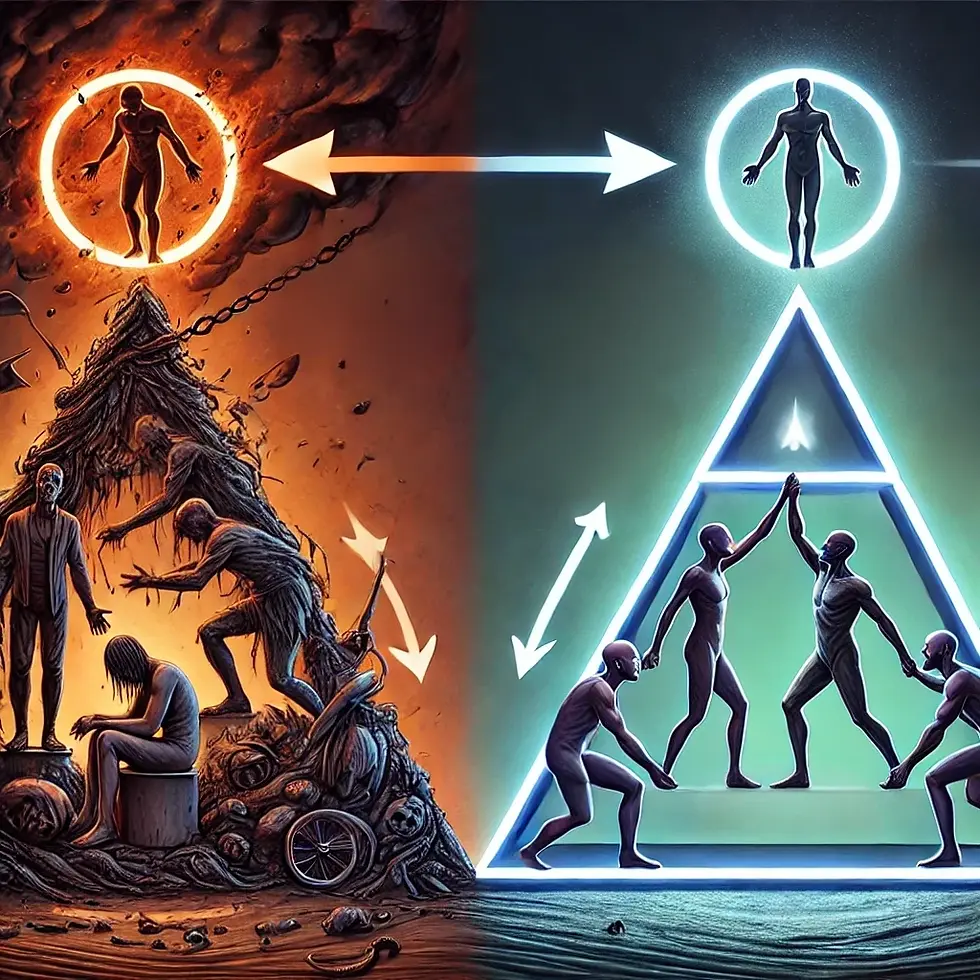
What is the Drama Triangle? (The Trap of Unhealthy Roles)
The Drama Triangle, first introduced by Dr. Stephen Karpman, describes three toxic roles that people unconsciously fall into during conflicts and unhealthy relationships:
1. The Victim ("Why does this always happens to me?")
Feels useless, helpless, or stuck.
Blames others or circumstances for their situation.
Seeks someone to "rescue" them rather than seeing their responsibility.
Avoids problem-solving and personal growth.
Can't see a way out.
2. The Rescuer ("I can fix this for them!")
Takes over other people’s problems.
Genuinely believes they are helping but actually takes away the victims sovereignty .
Feels needed or important through “rescuing” others.
Avoids dealing with their own by trying to fix everyone else around them.
3. The Persecutor ("This is your fault!")
Blames, criticises, and dominates to gain back control.
Uses guilt, shame, or aggression to keep others away.
Often a former Victim or Rescuer who became resentful.
Avoids vulnerability and accountability.
At first glance, you might resonate with one role more than the others. But here’s the real trap—people switch roles constantly within the same relationships.
For example:
A Victim needs a Rescuer, but later resents them and shifts into Persecutor mode.
A Rescuer exhausts themselves and becomes a Victim when their efforts aren’t appreciated or followed.
A Persecutor get's defensive and goes on the attack, then plays the Victim when confronted.
This cycle can repeat endlessly, keeping people trapped in conflict, emotional exhaustion, and toxic relationships.
But there’s a way out.
How to Break Free: The Empowerment Dynamic
David Emerald created The Empowerment Dynamic as the transformed version to the Drama Triangle. Instead of being stuck in a reactive loop, this model helps you take shift into healthier perspectives and resolutions with yourself and others.
Here’s how each role transforms:
1. The Victim → The Creator
❌ Victim mindset: "Why does this always happen to me?"
✅ Creator mindset: "What do I want to do about this?"
Takes responsibility for their emotions and actions.
Focuses on solutions instead of problems.
Chooses to see challenges as opportunities for growth.
Embodies their own sovereignty —they can create change.
2. The Rescuer → The Coach
❌ Rescuer mindset: "I have to fix this for them!" ✅ Coach mindset: "How can I help them find their own resolution?"
Supports others without trying to control or "rescue" them.
Encourages empowerment instead of dependency.
Sets boundaries and doesn’t sacrifice their well-being.
Recognises that people are their own sovereign being.
Humbles the self by acknowledging that we may not have the answer.
3. The Persecutor → The Challenger
❌ Persecutor mindset: "This is your fault! ✅ Challenger mindset: "How can I empathise and encourage accountability with compassion?
Holds people accountable without shaming or attacking them.
Sees the bigger picture and doesn't take things personally.
Challenges others to step into their power.
Communicates assertively instead of aggressively.
Encourages problem-solving instead of blame.
This framework is based on compassion, stability, autonomy and solution-oriented—but there’s another adaptation worth exploring, too.
The Winner’s Triangle: A Balanced Approach
In 1990, Acey Choy introduced The Winner’s Triangle, which offers a therapeutic approach to breaking out of the Drama Triangle. It’s similar to the Empowerment Dynamic but focuses more on emotional regulation and communication skills.
How The Winner’s Triangle Transforms Each Role:
✔️ Victim → Vulnerable
Instead of playing powerless, a Vulnerable person acknowledges their emotions and asks for support without manipulation.
Example: "I feel hurt, and I need time to process this."
✔️ Rescuer → Caring
Instead of over-giving or enabling, a Caring person offers support with healthy boundaries.
Example: "I care about you, and I trust that you can figure this out."
✔️ Persecutor → Assertive
Instead of blaming, an Assertive person sets firm boundaries without aggression
Example: "I won’t tolerate being spoken to that way. Let’s find a solution."
This model is especially helpful for learning healthier ways to express emotions and needs, rather than falling into automatic patterns of blame, over-helping, or avoidance.
How to Shift Out of the Drama Triangle
Recognise these patterns when they happen. Now that you know this exists, you may catch yourself in the future when it happens. To truly break free, you need to start shifting your mindset and actions.
1. Catch Yourself in the Drama Triangle
When you feel 'sorry for yourself' or stuck, ask: Am I acting like a Victim, waiting for someone to save me? Does it feel bittersweet that I see no way out? Does it feel easier than finding a solution?
When you feel the need to fix someone’s problems, ask: Am I taking responsibility for someone else’s choices? Why do I really want to give them what to do?
When you feel angry or blaming, ask: Am I acting as a Persecutor instead of holding space for accountability? What emotion am I responding from here and is it to the benefit of both of us?
Self-awareness is key. The sooner you catch the pattern, the sooner you can shift.
2. Reframe Your Mindset
Victim to Creator / Vulnerable: Ask, What action do I want to do get out of this? What solution can I see that ignites me with desire for action?
Rescuer to Coach / Caring: Ask, How can I priorities their empowerment rather than assuming I know what's best?
Persecutor to Challenger / Assertive: Ask, How can I encourage growth without using shame or blame? Can I take a pause before reacting and breathe into the emotions first so I can respond with compassion?
3. Set Boundaries & Stop Playing the Game
If someone expects you to rescue them, step back and let them take responsibility. Respect other peoples boundaries and do not assert yourself into someone else's journey uninvited.
If someone tries to drag you into a Victim role, don’t take the bait—redirect the conversation toward solutions.
If you’re tempted to attack or blame, pause and choose assertive but compassionate communication instead.
You don’t have to get sucked in the Drama Triangle, there is no light there. The moment you refuse to engage, the cycle starts to break.
Final Thoughts: The Choice to Break Free
The Drama Triangle is a trap, and you can recognise when it occurs and how to avoid it.
With the Empowerment Dynamic, you shift into power, responsibility, and growth.
With the Winner’s Triangle, you develop emotional regulation and healthy communication.
The moment you step into these new frameworks, you break free from toxic cycles and start building healthy, fulfilling relationships.